A claim may be genuine, yet fail because the necessary evidence was not properly preserved, presented, authenticated or admitted.
That is why proper legal guidance should be sought before and during litigation to determine what evidence is relevant, how it should be preserved, and how it may be lawfully presented before the court.
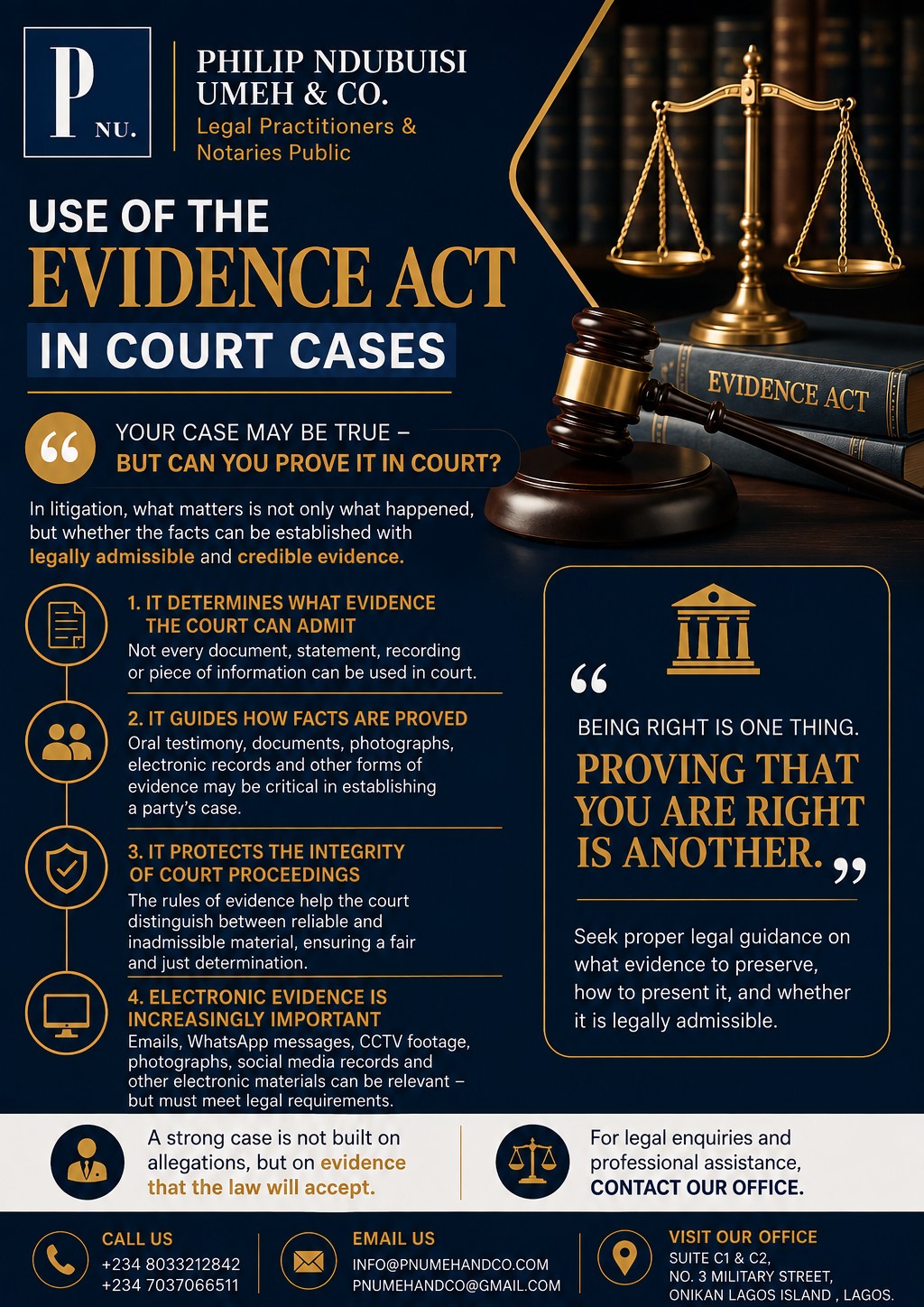
USE OF THE EVIDENCE ACT IN COURT CASES
The Evidence Act provides the legal framework governing the presentation, admissibility, evaluation and use of evidence in judicial proceedings.
📌 1. It determines what evidence the court can admit
Not every document, statement, recording or piece of information can automatically be used in court. Evidence must meet the requirements prescribed by law.
📌 2. It guides how facts are proved
Oral testimony, documents, photographs, electronic records and other forms of evidence may be critical in establishing a party’s case.
📌 3. It helps protect the integrity of judicial proceedings
The rules of evidence enable the court to separate legally reliable material from evidence that should not be considered in determining a case.
📌 4. Electronic evidence is increasingly important
Emails, WhatsApp conversations, CCTV footage, photographs, social media records and other electronic materials can be relevant to modern litigation. However, their admissibility and evidential value depend on applicable legal requirements.